Residual
Stress Measurement Strain Gauges (Gages) and
Instrumentation
A predominant factor contributing to the structural
failure of machine parts, pressure vessels,
framed structures, etc., may be the Residual
(locked-in) Stress that exists in the object
prior to its being put into service.
Residual Stress is usually introduced during
the manufacturing cycle, and are caused by processes
such as casting, welding, machining, heat treating,
molding, etc..
Residual Stress
can neither be detected nor evaluated by
conventional surface measurement techniques,
since the strain sensor (strain gauge, photoelastic
coating, etc.) can only respond to strain changes
that occur after the sensor is installed.
The most widely used practical technique for
measuring residual stresses is the hole-drilling
strain gauge method described in ASTM Standard
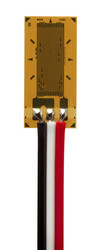
E837. With this method, a specially configured
electrical resistance strain gauge rosette is
bonded to the surface of the test object and
a small shallow hole is drilled through the
center of the rosette.
Residual Stress Measurement Strain Gauges (Gages)
and Instrumentation brochure provides more indepth
information simply click on the .pdf file download
below.
Residual
Stress Measurement Strain Gauges (Gages) and
Instrumentation